
AI Digital-Human Display Compute on 1-Unit Pilots: Right-Sizing NPU and Memory Without Fleet Economics
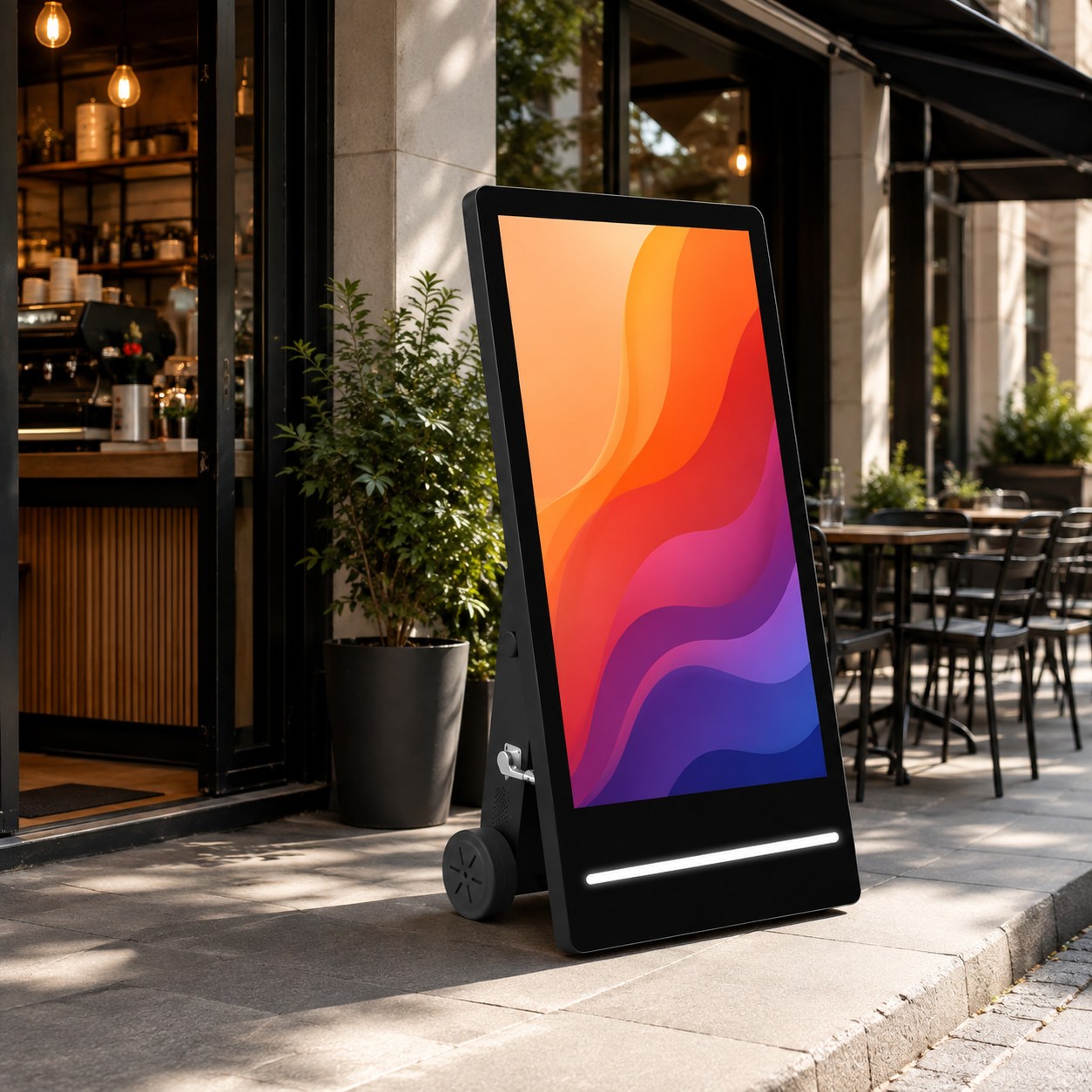

The Single-Unit Pilot Problem: No Fleet to Absorb Over-Spec
A single-unit pilot changes the math of every AI-hardware decision. In a fleet rollout, an over-specced accelerator is amortized across thousands of units, spare headroom is cheap, and engineering time is spread over many builds. When you size AI digital-human display compute on 1-unit pilots, all of that lands on one bill of materials, one certification cycle, and one schedule. The practical question is narrower than “what’s the best NPU”: right-size the edge AI inference platform for the models this pilot will actually run, without betting the whole hardware budget on a roadmap that may shift. For on-device AI in retail and QSR, inference is increasingly processed at the edge rather than in the cloud — a shift documented in the kiosk industry’s 2026 edge-AI guide [1]. The most common mistake is buying peak compute a single display can never exercise.
For a practical vendor example, readers can review Outdoor LED Displays for Transit & Smart City Projects · Wintouch.
The Real Constraint: Memory Bandwidth, Not Raw TOPS
Spec sheets lead with TOPS, but the number that decides tenness is memory bandwidth. On-device AI workloads, especially transformer inference at batch=1, have low arithmetic intensity: every weight read moves far more data than the few math operations it feeds. When model weights and activations cannot move from LPDDR to the NPU’s registers fast enough, the cores sit idle — a condition the 2026 on-device memory analysis calls “memory-bound” compute starvation [3]. In a single AI digital-human display running one model at a time, that is exactly the regime you operate in.
The automotive cockpit market hit the same wall. SemiDrive’s X10 adds only ~10 TOPS over the Qualcomm 8295 but more than doubles memory bandwidth, which is precisely what lets it run a 7B model the 8295 can only stretch to [2]. The pattern is consistent: chips designed for AI keep widening the memory bus. So compare NPU compute TOPS and memory bandwidth GB/s together — bandwidth, not peak TOPS, is the binding constraint for a one-unit build.
Building a Sizing Decision Framework for One Unit
AI digital-human pilot compute sizing collapses to five steps a non-ML engineer can run in an afternoon. Work outward from the target model stack, and treat every number as a requirement you will defend in procurement.
- Define the model stack. List weights, KV cache, and activations for each model the pilot will run, plus OS and display buffers.
- Estimate memory footprint. Sum weights, KV cache, and activations; 8–16 GB of LPDDR is the typical envelope for on-device models [3].
- Map features to a TOPS band. Match the workload class to a compute range, not a single rating.
- Check bandwidth against footprint. The bus must feed the weight stream, not just fit it.
- Add measured headroom. Over-provision 20–30% above what you verify — never an arbitrary percentage.
The workload table below treats TOPS as directional references, not guarantees — and it is where the compute-headroom-versus-cost tradeoff becomes concrete.
| Workload class | Example model | NPU TOPS band | LPDDR capacity / bandwidth |
|---|---|---|---|
| Voice (QSR ordering) | small ASR + NLU | 10–20 | 8 GB / 50+ GB/s |
| Vision (audience analytics) | object detection | 20–40 | 8–12 GB / 80+ GB/s |
| Small LLM (assistant) | 3–8B chat | 40–50 | 12–16 GB / 100+ GB/s |
| Multimodal (conversational avatar) | 7B VLM | 50+ | 16 GB / 150+ GB/s |
These bands sit inside the 10–45 TOPS and 50–150 GB/s ranges typical of mobile-class on-device silicon [3].
NPU and Memory Specs: What to Actually Compare
For a one-unit pilot, compare platforms as a system — silicon, memory, and form factor together — rather than by TOPS alone. The table positions common families as directional engineering references, not verified factory data for any specific unit you order. Always confirm published numbers against a bench sample before you commit.
| Platform | NPU TOPS | Memory notes | Form factor |
|---|---|---|---|
| Intel Core Ultra (AI Boost) | mid-teens | LPDDR5, moderate bandwidth | box PC, SoM |
| NVIDIA Jetson Orin | broad class | high-bandwidth, industrial | embedded board |
| Rockchip RK3588 | ~6 class | LPDDR4/5, cost-optimized | SoM, media player |
| Hailo-8 AI Module | add-on AI | uses host memory | add-on accelerator |
| Qualcomm (Hexagon NPU) | variable | efficient LPDDR | SoM, Windows-on-ARM |
Intel Core Ultra positions as the high-stability Windows choice for transactional kiosks, Jetson Orin as the vision-heavy industrial option, and Rockchip’s RK3588 as the cost leader for Android media players; the Hailo-8 adds inference power to existing boards, and the System-on-Module form factor pulls CPU, RAM, and NPU onto one compact board for slim displays [1]. Crucial for kiosks and signage in the field, but the deciding factor for a single display remains whether the memory system can keep the NPU fed — carry the bandwidth comparison forward when comparing SoC choice for digital-human displays.
The 1-Unit Pilot Sizing Checklist
Use this template to right-size the accelerator for an AI digital signage pilot without a fleet to validate guesses:
- Lock the workload. List every model and input stream the pilot must serve simultaneously, not sequentially.
- Estimate footprint. Weights + KV cache + activations + OS/display buffers, in GB.
- Map to a TOPS band. Select from the workload table above.
- Validate bandwidth. Confirm the bus feeds the weight stream at full concurrency.
- Apply the headroom rule. Add 20–30% above measured requirement, not a round “double it.”
- Note the scaling path. Record which SKU the pilot could swap to if the fleet grows, so the first unit shares a platform rather than being a dead end.
Document the assumed model, the measured footprint, and the margin chosen — this becomes your repeatable baseline and feeds the display footprint-sizing you will reuse on later builds.
Documenting the Build for a Compliance Dossier
The sizing rationale should close with procurement documentation, not end at the bench. Because certification and engineering cost land on a single pilot unit, a written rationale — the chosen SKU, the memory configuration, the TOPS band, and the measured headroom margin — gives your OEM/ODM partner a defensible justification and keeps marketing-vs-verified-spec issues from surfacing late. Distinguish directional vendor TOPS figures from the bandwidth and capacity you actually verified on the unit; that discipline is what makes AI digital-human display compute on a 1-unit pilot auditable.
Teams comparing implementation options can also consult What IP65 actually means for outdoor kiosks · Wintouch.
Treat this document as the first page of a deployment plan, then use it to stress-test the on-device versus cloud decision once the pilot goes live. Right-size now, document the reasoning, and the one-unit build becomes a template instead of a one-off bet.
Content reviewed: 2026-08-12.
Evidence confidence
Confidence: Medium. This rating reflects cross-checking 3 sources across 3 independent domains. It measures evidence coverage, not certainty; verify safety-critical work against manufacturer instructions and local requirements.
References
APA 7th edition
- ↑Cited 2 timesKioskindustry. (n.d.). The 2026 Standard for Edge AI & NPU Integration. Retrieved August 12, 2026, from https://kioskindustry.org/ai/.
- ↑Sbdautomotive. (n.d.). AI cockpits compete on compute, but the real limit is memory. Retrieved August 12, 2026, from https://www.sbdautomotive.com/post/ai-cockpits-compete-on-compute-but-the-real-limit-is-memory.
- ↑Cited 3 timesGiznova. (n.d.). On-Device AI Memory Limits: Performance, Thermal & Bandwidth Explained (2026). Retrieved August 12, 2026, from https://giznova.in/on-device-ai-memory-limits.
You should also read:
Edge AI tablet procurement single-unit pilot: Right-Sizing NPU, Memory and Compute
Edge Ai Tablet Procurement Single-Unit Pilot is the decision framework examined in this guide. The sections below turn sourced evidence into practical comparison criteria without overstating what the available research can prove. For a single-unit edge AI tablet pilot, size the NPU and memory for…
Continue reading...
Edge AI vs Cloud for Android Tablet Fleets: An NPU, Memory and On-Device vs Cloud Decision Framework
Edge Ai Vs Cloud For Android Tablet Fleets is the decision framework examined in this guide. The sections below turn sourced evidence into practical comparison criteria without overstating what the available research can prove. For an Android tablet fleet, edge AI vs cloud is a…
Continue reading...
Edge AI Tablet ODM Sourcing: Right-Size NPU for Your Commercial Fleet
Edge AI tablet ODM sourcing starts with one question the marketing sheets dodge: how much on-device NPU does your fleet actually need? Asking that before you negotiate MOQ and per-unit cost separates real edge-AI compute requirements from TOPS headlines. This guide walks validation-first buyers through…
Continue reading...