
On-Device vs Cloud AI Compute for Self-Service Kiosks: A Latency and Deployment Decision Framework
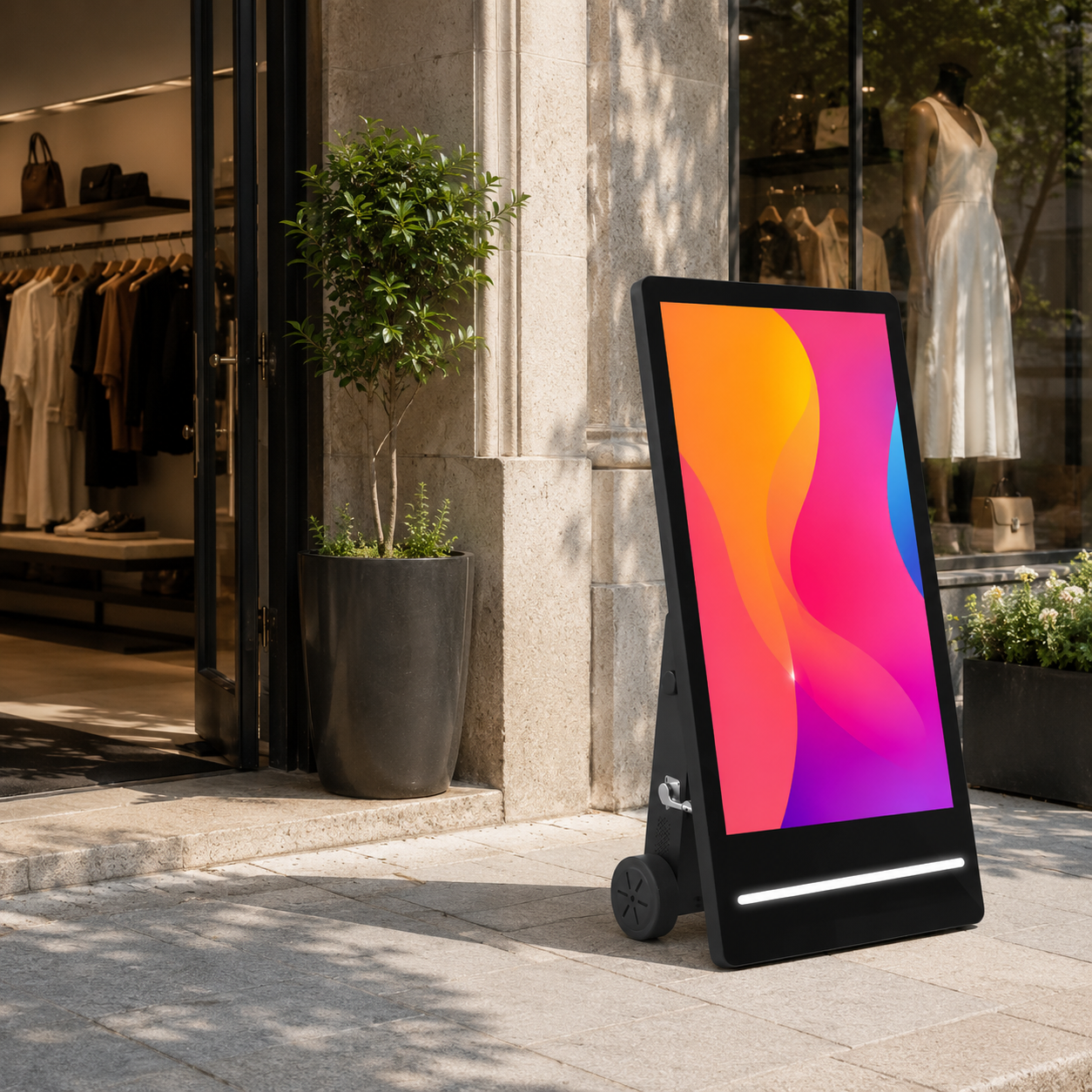
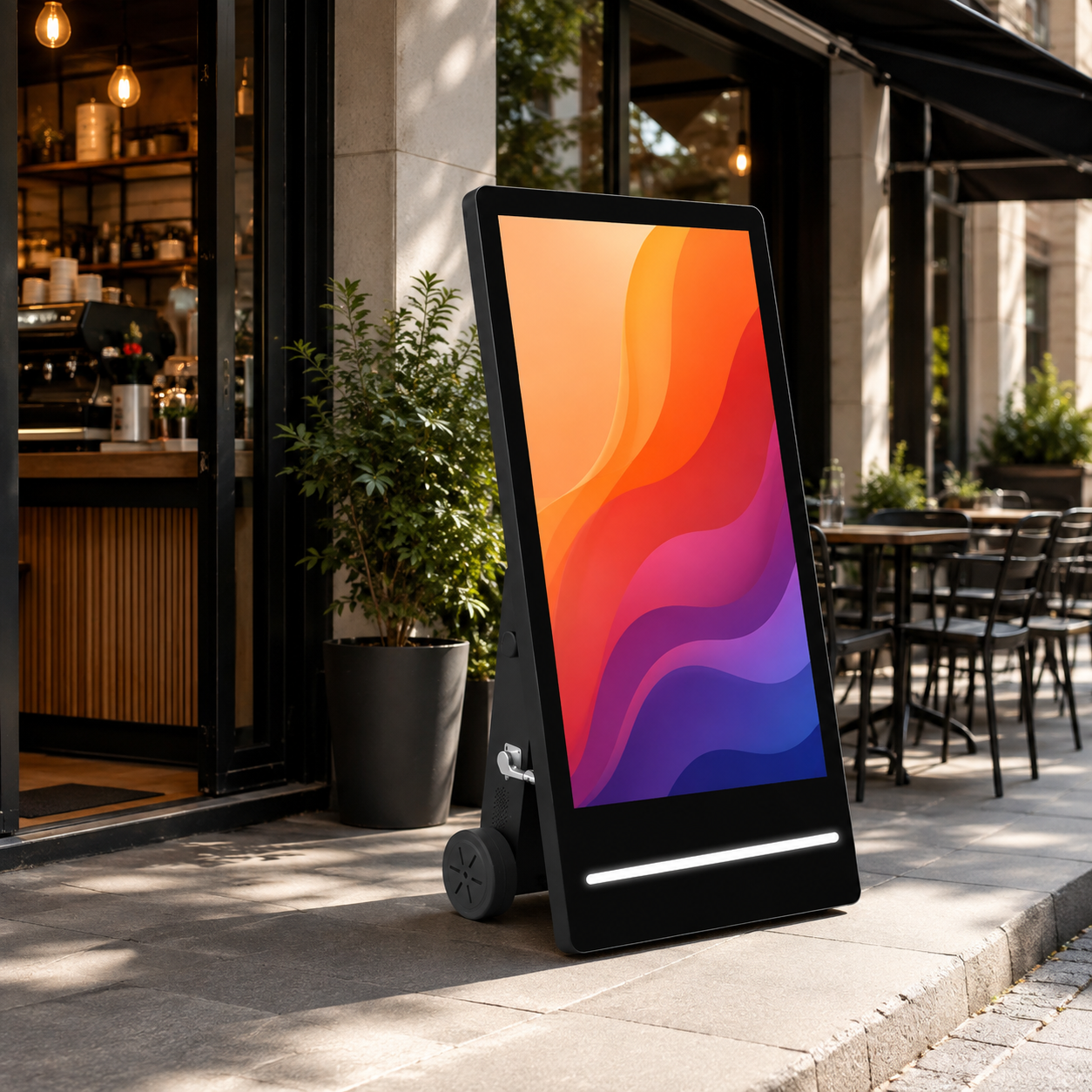
On-Device Vs Cloud Ai Compute For Self-Service Kiosks is the decision framework examined in this guide. The sections below turn sourced evidence into practical comparison criteria without overstating what the available research can prove.
The 2026 Question: Where Should Kiosk Inference Run?
The on-device vs cloud AI compute decision for self-service kiosks comes down to whether inference should run on the kiosk’s own silicon or in a data center. On-device processing eliminates the round trip, keeping vision and voice instant and private, while cloud processing unlocks larger models. AI integration is the industry’s number-one 2026 digital signage trend, but for deployers the real question is engineering architecture, not marketing promise. Three forces decide it: end-to-end latency, privacy and data residency, and per-inference cost.
Teams comparing implementation options can also consult Outdoor LED Displays for Transit & Smart City Projects · Wintouch.
What ‘On-Device’ and ‘Cloud’ Actually Mean for a Kiosk Deployment
“On-device” model runs entirely on the kiosk or a local edge box, while “cloud” means frames and prompts cross the network to a remote inference endpoint. Hybrid routes each request between the two based on task needs. The trade-offs are straightforward.
| Attribute | On-device | Cloud | Hybrid |
|---|---|---|---|
| Edge AI inference latency | Sub-round-trip, instant | Network + queuing + generation | On-device fast, cloud slower |
| Model ceiling | Quantized 1B-8B, NPU-bound | Frontier, multimodal | Both, routed |
| Privacy & data residency | Full on-device | Data leaves perimeter | Split by sensitivity |
| Cost shape | High upfront, near-zero marginal | Per-inference, variable | Mixed |
| Scaling | Per-unit silicon | Elastic, linear | Tiered |
| Ops burden | Firmware updates, thermals | Cloud vendor, network | Both |
Latency Is the Adoption Driver for Real-Time Kiosk Workloads
For latency-critical workloads, on-device inference cuts the cloud API round trip — network, queuing, and generation — down to a fraction of the time; local inference completes in 20-40ms, while cloud calls average 800ms-1.5s and can spike higher under load ([2]). Sub-50ms time-to-first-token is a requirement for computer vision, QSR voice ordering, audience analytics, person counting, and real-time personalization, not a luxury ([2]). This builds on the site’s AI-accelerator sizing work, which treats inference latency as the bottleneck that determines usable silicon.
On-device AI latency vs cloud: why sub-round-trip wins
Eliminating round-trip latency enables instant responses for real-time applications, which is why edge inference is replacing unstable cloud dependence in unattended retail ([1]).
Local AI vs cloud AI inference for real-time kiosks
When AI is fast enough to be invisible, people integrate it into workflows instead of treating it as a separate step — latency is an adoption driver, not just a performance metric ([2]).
Privacy, Data Residency, and the Kiosk Perimeter
On-device AI privacy benefits matter most in unattended retail, where cameras digitize customer streams and biometrics at the edge. Keeping inference on the kiosk means PII, biometric data, and video never leave the device, supporting data residency and data sovereignty while reducing the data a breach can expose. On-device processing keeps data on the operator’s own infrastructure, which is why a majority of enterprise inference now runs on-premise ([2]). A hybrid design can localize sensitive frames while escalating only anonymized summaries to the cloud.
Capability Ceiling: The NPU, TOPS, and Model-Sizing Trade-Off
On-device runs quantized 1B-8B models on a dedicated NPU, while frontier reasoning and multimodal work still needs cloud capacity. TOPS (trillions of operations per second) is a rough sizing tool that must be balanced with power, thermals, and software support rather than treated as a hard spec ([3]). For 2026, the baseline kiosk spec has shifted toward Edge AI inference, with silicon options including Intel Core Ultra “AI Boost” for Windows transactional kiosks, NVIDIA Jetson Orin for vision, Rockchip RK3588 for Android players, and Qualcomm Hexagon NPU for Windows on ARM; Hailo-8 add-ons bring inference power to legacy boards ([3]).
NPU vs cloud AI kiosk architecture
Hardware accelerators such as NPUs and GPUs measurably shift LLM inference trade-offs, supporting the case for dedicating silicon to real-time kiosk layers ([4]).
AI accelerator sizing: TOPS as a starting point, not a spec
Cost Predictability: Flat On-Device vs Per-Inference Cloud
The cost shapes differ sharply. On-device carries high upfront silicon cost and near-zero marginal cost — idle inference is free — while cloud is variable per-inference and scales linearly but can spike unpredictably ([5]). Local AI makes sense for high-volume workloads with predictable usage, where cloud costs scale linearly while on-device costs stay flat ([7]). Ask whether the workload is high-frequency and predictable (on-device wins) or low-frequency and spiky (cloud is fine).
Local AI vs cloud AI inference: matching cost shape to traffic
The Three-Question Kiosk Decision Framework
Use this decision gate to map any kiosk workload to pure on-device, pure cloud, or hybrid routing. Answer each question honestly against your deployment.
- Can the data leave the device? If customer video, biometrics, or transaction data are sensitive or restricted, default to on-device ([2]).
- Is latency critical to the experience? For vision, voice ordering, and real-time personalization, default to on-device ([2]).
- Is the workload predictable and high-volume? High-frequency inference is almost always cheaper on-device, since cloud costs scale linearly while on-device stays flat ([2]).
Add a fourth: does the task need a frontier model ceiling? If yes, that layer escalates to cloud. If you answered no to all three, pure cloud is probably fine — but most deployments answer yes to at least one. This framework for on-device vs cloud AI compute for self-service kiosks condenses the decision into a repeatable, defensible gate.
The Hybrid Routing Layer: When Kiosks Do Both
The recommended default for most deployers is hybrid on-device cloud AI routing: run the high-frequency, latency-sensitive, privacy-constrained layers on-device — vision, voice, intent classification, local personalization — and escalate low-frequency, high-complexity tasks to cloud for deeper reasoning or cross-store analysis ([6]). A routing layer decides which path each request takes based on task complexity and connectivity ([7]). This pattern is emerging across manufacturing, healthcare, finance, and retail ([6]).
Teams comparing implementation options can also consult What IP65 actually means for outdoor kiosks · Wintouch.
In practice, most kiosk deployments land on a hybrid that blends resilient on-device inference with cloud intelligence ([6]). For deeper architecture detail, see the site’s on-device vs cloud processing architecture guide, the AI-accelerator sizing piece, and deployment planning. The engineering-led conclusion: choose compute by workload, not by vendor claim — and for a defensible 2026 baseline, evaluate the site’s AI compute range against your own three answered questions. The final decision on on-device vs cloud AI compute for self-service kiosks is an architecture choice you can defend with numbers.
Content reviewed: 2026-08-10.
Evidence confidence
Confidence: Medium. This rating reflects cross-checking 7 sources across 7 independent domains. It measures evidence coverage, not certainty; verify safety-critical work against manufacturer instructions and local requirements.
References
APA 7th edition
- ↑Couchbase. (2026). On-Device AI: Benefits, Use Cases, and Challenges. https://www.couchbase.com/blog/on-device-ai/.
- ↑Cited 7 timesCrewdle. (2026). On-Device AI and Data Sovereignty: The 2026 Privacy. https://crewdle.com/blog/local-ai-data-sovereignty/.
- ↑Cited 2 timesKioskindustry. (n.d.). The 2026 Standard for Edge AI & NPU Integration. Retrieved August 10, 2026, from https://kioskindustry.org/ai/.
- ↑ARXIV. (2026). Cloud to Edge: Benchmarking LLM Inference on Hardware. https://arxiv.org/html/2604.24785v1.
- ↑Lenovo. (2026). On-Premise vs Cloud: Generative AI Total Cost of. https://lenovopress.lenovo.com/lp2368-on-premise-vs-cloud-generative-ai-total-cost-of-ownership-2026-edition.
- ↑Cited 3 timesCygnet. (n.d.). On-Device vs Cloud AI: Enterprise Choices for 2026. Retrieved August 10, 2026, from https://www.cygnet.one/blog/on-device-ai-vs-cloud-only-ai-for-enterprises-in-2026.
- ↑Cited 2 timesApptitude. (n.d.). On-Device AI for Mobile Apps: Phone vs Cloud Decision Framework | Apptitude. Retrieved August 10, 2026, from https://apptitude.io/blog/on-device-ai-mobile-apps-when-run-phone-vs-cloud.
You should also read:
AI Digital-Human Display Compute on 1-Unit Pilots: Right-Sizing NPU and Memory Without Fleet Economics
The Single-Unit Pilot Problem: No Fleet to Absorb Over-Spec A single-unit pilot changes the math of every AI-hardware decision. In a fleet rollout, an over-specced accelerator is amortized across thousands of units, spare headroom is cheap, and engineering time is spread over many builds. When…
Continue reading...
Kiosk AI Accelerator Sizing: Compute Headroom vs Cost for Voice and Facial Recognition
Kiosk AI accelerator sizing (compute headroom vs cost) is the decision that separates a deployable edge system from a box that stalls at launch. When voice ordering, facial-recognition check-in, and loss-prevention vision ship together in one kiosk, the sizing question is not “how many TOPS…
Continue reading...
SoC Choice for AI Digital-Human Displays: Balancing Compute Headroom Against Memory Cost
Why the SoC and memory choice decides whether your AI display runs on-device The SoC choice for AI digital-human displays comes down to one trade: how much compute headroom you buy against how much you pay for the memory that feeds it. A conversational AI…
Continue reading...