
Edge-AI vs Cloud on Rugged Mobile vs Fixed Kiosks: Sizing On-Device Compute Across the 2026 Device Mix
For a 2026 kiosk fleet, the Edge-AI vs Cloud on Rugged Mobile vs Fixed Kiosks decision lands differently per form factor: run low-latency, privacy-sensitive inference on-device as the default, and push only heavy, rare workloads to the cloud. The gating line is roughly a 500M-parameter model ceiling for on-device AI — rugged mobile tablets are battery- and thermal-limited, while fixed commercial displays and kiosks are wall-power- and enclosure-room-limited.
Edge AI vs Cloud AI Inference for Kiosks: The 2026 Shift
The baseline spec for kiosks and digital signage has moved away from unstable cloud connections toward edge AI inference, with data processed on the device itself rather than sent upstream ([1]). Edge AI deploys AI algorithms directly on local edge devices to enable real-time processing and responses ([2]), which cuts latency, reduces cloud costs, and improves privacy ([3]).
Teams comparing implementation options can also consult custom Android tablet factory.
Why the Edge/Cloud Decision Is No Longer Binary
Choosing between on-device and cloud inference is a spectrum, not a fork. [5] scores five dimensions (latency, privacy, cost, connectivity, model complexity) from cloud-first to edge-first; a low total favors cloud, a high total favors edge, and the middle range points to a hybrid split. Processing data on-device or on local systems can cut latency, reduce cloud costs, and improve privacy for your application ([3]).
The 2026 Baseline: On-Device as the Default for Kiosks
Reflecting 2026 procurement trends, edg-ai vendors now present on-device inference as the default architecture for retail, robotics, and industrial deployments ([6]). Because cloud-only deployments often prove impractical where low latency, reliability, and privacy matter, retailers increasingly run computer vision, customer analytics, and voice interaction directly on local devices ([4]). The modern edge-AI device fleet moves beyond data centers into stores, kiosks, and signage networks ([4]).
Sizing On-Device Compute: The 500M-Parameter Ceiling
Model complexity is the gating dimension. If a use case needs a model with more than roughly 500M parameters, on-device inference is not yet viable on mobile hardware, regardless of how the other dimensions score; if the model fits the edge compute envelope, the other four dimensions almost always tip toward edge ([5]). NPU TOPS is a useful rough sizing metric but must be balanced with power, thermals, and software support ([1]). Note that TOPS, thermal envelopes, and software support vary by exact SKU and SoC, so confirm the budget against your specific OEM/ODM build partner.
Form Factor Changes Everything: Rugged Mobile vs Fixed Kiosks
The same model thresholds land differently depending on whether you spec an OEM ODM Android tablet or a fixed commercial display and industrial touchscreen. Rugged mobile devices are battery- and thermal-limited, while mounted displays and fixed kiosks are wall-power- and enclosure-room-limited — so a TOPS budget that fits one form factor rarely ports cleanly to the other.
Rugged mobile tablets: battery- and thermal-limited
A self-contained edge-AI rugged mobile tablet must keep inference within its battery and passive-thermal budget, which caps practical on-device model size well below what an industrial touchscreen can house. In practice, lightweight models and camera pipelines can run with sub-20ms inference on Android hardware, and zero-copy camera-HAL sharing can push total pipeline latency below 10ms ([5]). Plan on-device text-to-speech as table stakes by late 2026, as lightweight TTS models approach real-time on mobile NPUs ([5]).
Mounted commercial displays and fixed kiosks: power- and enclosure-room-limited
For a commercial display or fixed self-service kiosk, wall power removes the battery constraint, so the limit becomes the enclosure. A fanless AI box PC mounted inside a kiosk or behind a screen eliminates moving parts to prevent dust ingress in harsh environments, and offers expansion slots for performance cards like the Hailo-8 module or discrete GPUs for complex computer vision ([1]). Edge-AI boxes like this remain the powerhouse choice for digital signage deployments with demanding local vision workloads ([1]).
A Hybrid Split Rule: When Edge and Cloud Cooperate
A practical edge/cloud split rule is to run lightweight preprocessing and filtering on-device and send only relevant data to cloud models; run bounded, low-risk workloads fully at the edge, and reserve the cloud for model updates, aggregated analytics, and very large models ([5]). The same principle extends to fleets: each AI edge device handles latency-critical tasks locally while the cloud manages OTA model refreshes and fleet-level reporting. Privacy-by-design plays a deciding role — architectures that perform on-device analytics without storing identifiable images gain faster internal approvals, reduced regulatory exposure, and lower long-term compliance cost ([6]). Ground your TOPS, thermal, and memory targets against the exact SKU, because figures vary by SoC and OEM/ODM build partner.
For product details and project planning, see business and education tablet models.
Related guides
- Edge AI vs Cloud for Android Tablet Fleets: An NPU, Memory and On-Device vs Cloud Decision Framework
- On-Device vs Cloud AI Compute for Self-Service Kiosks: A Latency and Deployment Decision Framework
- AI HoloBox on-device vs cloud processing architecture: A Network and Latency Guide for Deployers
- Edge AI tablet procurement single-unit pilot: Right-Sizing NPU, Memory and Compute
Planning an OEM tablet project?
Share the required screen size, performance, RAM/storage, firmware, branding, certifications, destination market and expected quantity so Wintouch can confirm a suitable configuration and project plan.
- Phone
- +8613922898904
- [email protected]
- +8613922898904
Content reviewed: 2026-08-27.
Evidence confidence
Confidence: Medium. This rating reflects cross-checking 6 sources across 6 independent domains. It measures evidence coverage, not certainty; verify safety-critical work against manufacturer instructions and local requirements.
References
APA 7th edition
- ↑Cited 4 timesKioskindustry. (n.d.). The 2026 Standard for Edge AI & NPU Integration. Retrieved August 27, 2026, from https://kioskindustry.org/ai/.
- ↑Edgeaifoundation. (n.d.). Download “2026 and Beyond: The Edge AI Transformation”. Retrieved August 27, 2026, from https://www.edgeaifoundation.org/posts/find-edge-ai-solutions-for-your-business.
- ↑Cited 2 timesLinkedin. (n.d.). What Is Edge AI? How On-Device AI Changes Business in. Retrieved August 27, 2026, from https://www.linkedin.com/pulse/what-edge-ai-how-on-device-changes-business-2026-andrea-rickett-gnykc.
- ↑Cited 2 timesKioskasia. (2026). Computex 2026: Edge AI Reshapes Smart Retail and Kiosks. https://kioskasia.org/computex-2026-why-edge-ai-is-becoming-the-real-engine-behind-smart-retail/.
- ↑Cited 5 timesAlephZero Labs Blog. (n.d.). On-Device AI Inference in 2026: Sub-20ms on Android, Real Benchmarks, and When to Go Edge. Retrieved August 27, 2026, from https://www.alephzerolabs.com/blog/on-device-ai-2026-sub-20ms.
- ↑Cited 2 timesOkgoobuy. (n.d.). 2026 Edge AI Vision Trends: Signage player, AI Retail, Robotics & Industrial AI Boxes(1). Retrieved August 27, 2026, from https://www.okgoobuy.com/2026-edge-ai-vision-trends.html.
You should also read:

Edge AI vs Cloud for Android Tablet Fleets: An NPU, Memory and On-Device vs Cloud Decision Framework
Edge Ai Vs Cloud For Android Tablet Fleets is the decision framework examined in this guide. The sections below turn sourced evidence into practical comparison criteria without overstating what the available research can prove. For an Android tablet fleet, edge AI vs cloud is a…
Continue reading...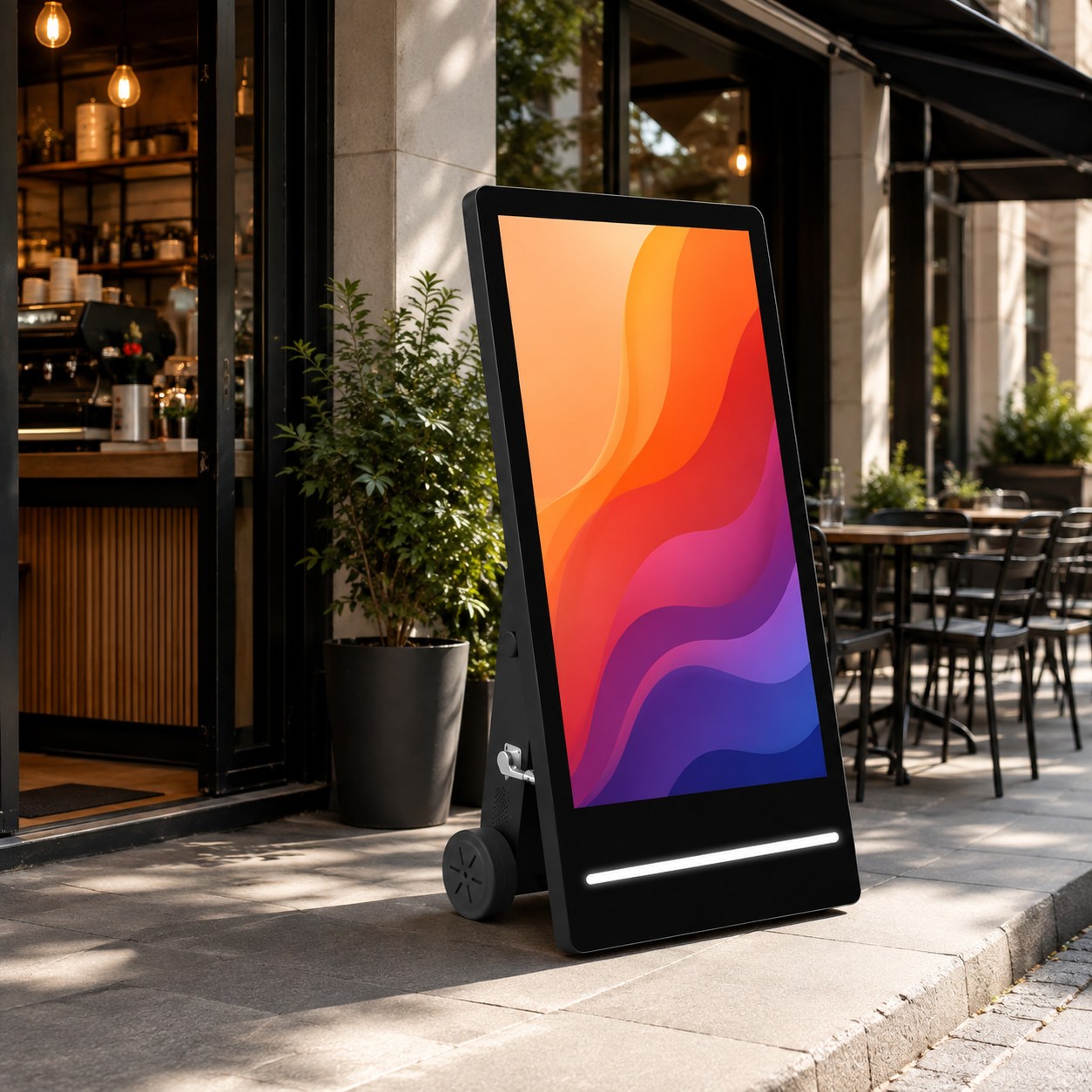
AI Digital-Human Display Compute on 1-Unit Pilots: Right-Sizing NPU and Memory Without Fleet Economics
The Single-Unit Pilot Problem: No Fleet to Absorb Over-Spec A single-unit pilot changes the math of every AI-hardware decision. In a fleet rollout, an over-specced accelerator is amortized across thousands of units, spare headroom is cheap, and engineering time is spread over many builds. When…
Continue reading...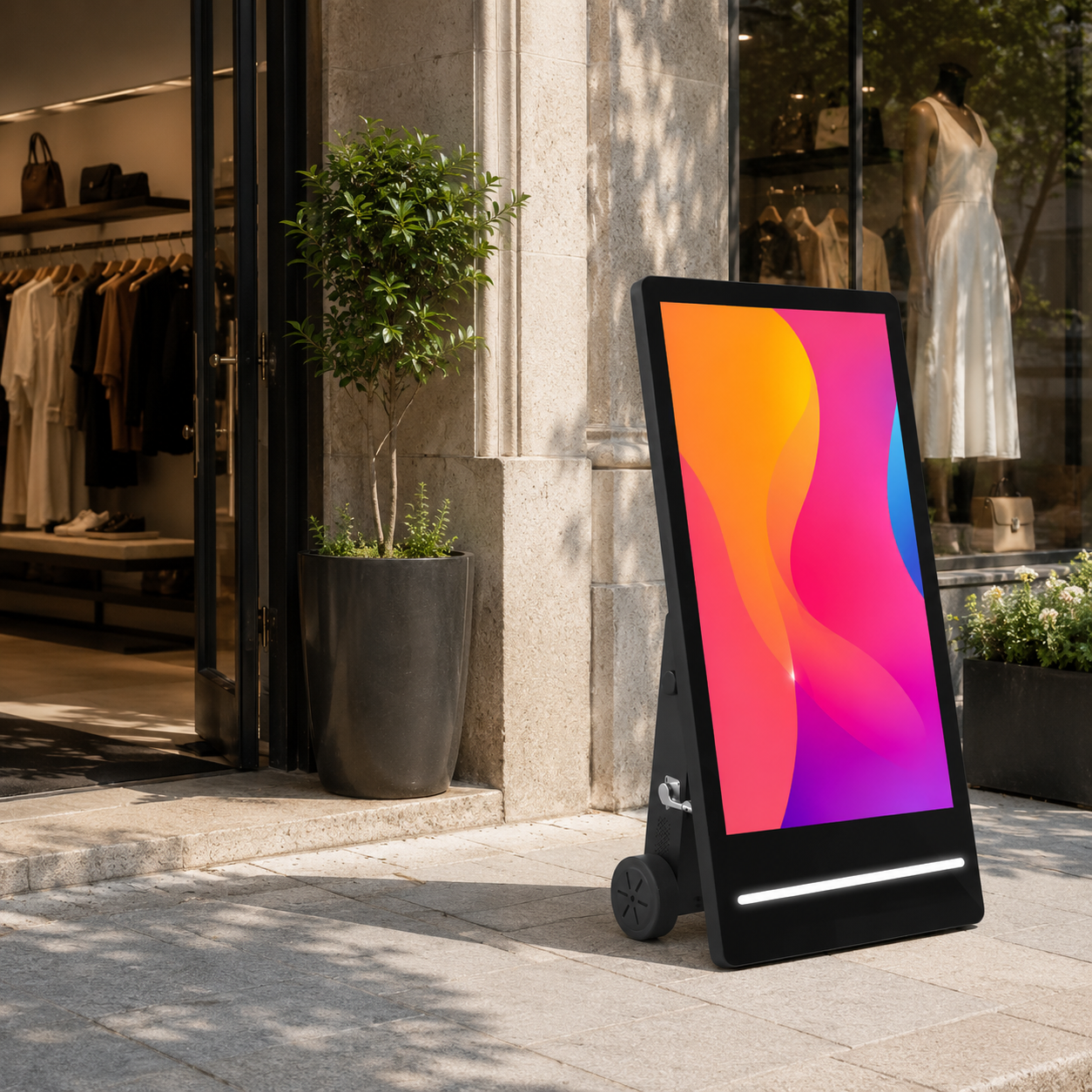
On-Device vs Cloud AI Compute for Self-Service Kiosks: A Latency and Deployment Decision Framework
On-Device Vs Cloud Ai Compute For Self-Service Kiosks is the decision framework examined in this guide. The sections below turn sourced evidence into practical comparison criteria without overstating what the available research can prove. The on-device vs cloud AI compute decision for self-service kiosks comes…
Continue reading...